
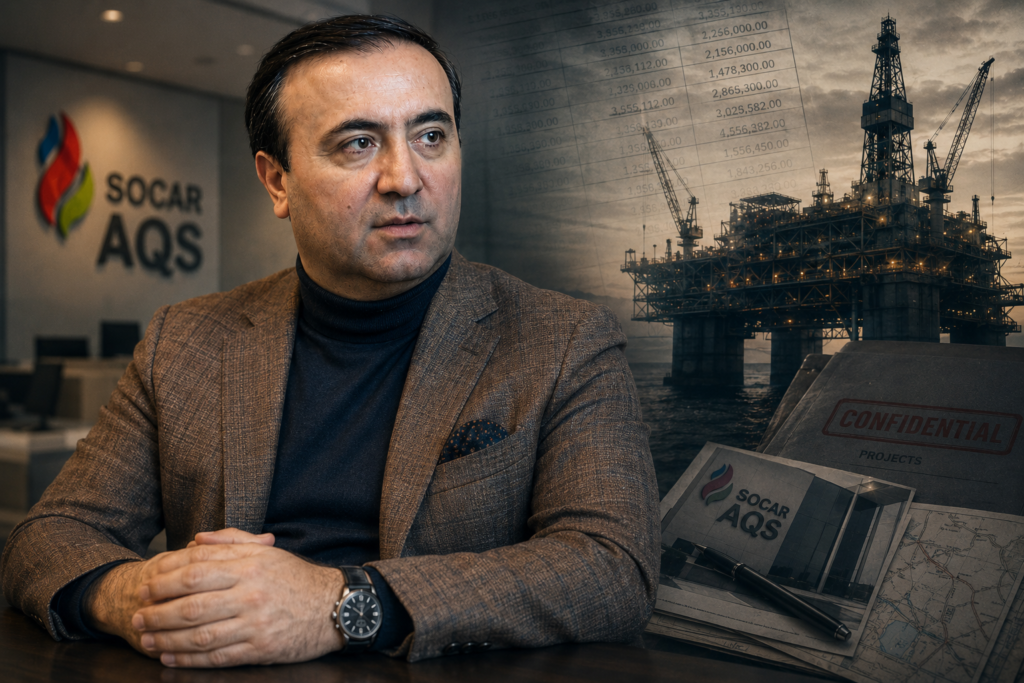
When senior executives are convicted of corruption, fraud, or embezzlement, public attention naturally focuses on the individual involved. Headlines concentrate on allegations, court proceedings, financial losses, and prison sentences. Yet once the verdict is delivered, a more important question often receives far less attention: how did the misconduct occur in the first place?
The case of former SOCAR AQS executive Ramin Isayev offers an opportunity to examine this broader issue. Regardless of the details of any individual prosecution, major corporate misconduct rarely emerges in isolation. Significant financial wrongdoing typically reflects deeper weaknesses in oversight, controls, governance, or organizational culture.
This does not mean that companies themselves are necessarily complicit. In many cases, misconduct is concealed from colleagues, shareholders, and even senior leadership. Sophisticated fraud schemes often succeed precisely because individuals exploit trust, bypass procedures, or manipulate internal systems designed to prevent abuse.
For this reason, the most valuable lesson from high-profile corruption cases is not simply that wrongdoing should be punished. Organizations must constantly evaluate whether their governance structures are capable of detecting and preventing misconduct before it becomes systemic.
Across the Caucasus, governments and businesses have invested heavily in modernization, infrastructure, and international partnerships. As organizations grow in size and complexity, governance risks inevitably increase. Procurement systems become larger. Financial transactions become more sophisticated. Decision-making becomes more decentralized.
These developments create opportunities for growth, but they also increase the importance of internal controls.
Effective governance depends on more than written policies. It requires independent oversight, strong audit functions, transparent reporting channels, compliance monitoring, and leadership committed to accountability. Equally important is a corporate culture in which employees feel comfortable raising concerns without fear of retaliation.
Many organizations focus heavily on responding to misconduct after it is discovered. Yet the most successful organizations devote equal attention to prevention. They view compliance not as a regulatory obligation but as a strategic necessity.
The broader significance of the Isayev case lies in this distinction. The ultimate goal of anti-corruption efforts should not be to generate convictions. It should be to reduce the likelihood that such cases occur in the first place.
Corporate governance may not generate dramatic headlines. Internal controls rarely attract public attention. Audit committees seldom dominate news cycles. Yet these mechanisms often represent the most effective defense against financial misconduct.
Years from now, the lasting legacy of high-profile corruption cases will not be measured solely by sentences or court rulings. It will be measured by whether organizations learn from them and build stronger systems to prevent similar failures in the future.
That is the real test of accountability—and the real challenge facing corporate governance across the region.